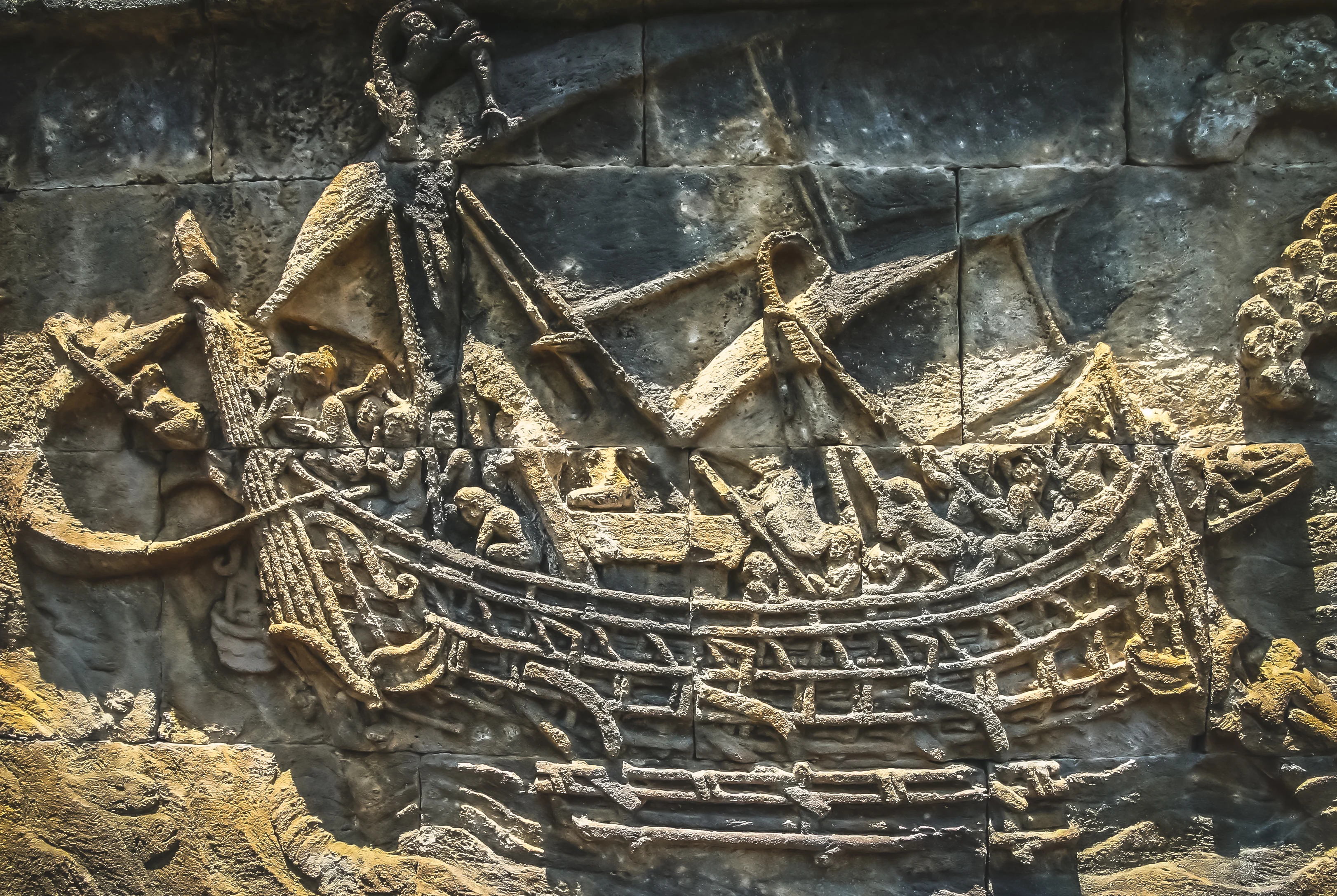
Stymied by a five-week wait for Christopher Nolan's IMAX screening of The Odyssey, I turned instead to Emily Wilson's celebrated translation of Homer's epic. She opens with a line that feels unexpectedly modern: “Tell me about a complicated man.” The Greek word is polytropos — literally, “of many turns.” Earlier translations emphasized Odysseus's cunning. Wilson's interpretation highlights something more interesting: adaptability. Odysseus survives not because he is the strongest man in the poem, but because he is better at navigating uncertainty.
As I was reading it, I realized Homer wasn't only writing about a man's journey home. He was writing about what happens when intelligence matters more than strength — when survival depends on seeing what others cannot.
Every incumbent confronting AI faces the same paradox: the people responsible for protecting today's business are often the least equipped to see tomorrow's disruption coming. Large companies are built to optimize what they know; they are not naturally designed to discover what they do not.
In Book 7, Odysseus approaches the court of the Phaeacians — a kingdom he has never seen, among people who distrust strangers. Athena goes ahead of him. She does not fight his battle. She does something more valuable: she understands the terrain before he enters it. She cloaks him in mist so he passes unnoticed, reads a social landscape he cannot see, and gives him one crucial instruction: appeal first to Queen Arete, not King Alcinous. That single piece of context changes everything. Odysseus succeeds not because he overpowers the room, but because he enters it with knowledge others do not have.
Every company needs its Athena. That is the original promise of corporate venture capital.
The companies that lose this AI cycle will not lose because they lacked resources. They will lose because they lacked visibility. The challenge is not access to information. Companies have more information than ever. The challenge is knowing which signals matter before they become obvious.
A venture investment is one way to solve that problem. The financial return matters. But the deeper value is proximity: working alongside founders, seeing emerging technologies before they become consensus, understanding new business models while they are still being formed. The investment is the ticket. The learning is the return.
I think of it as a strategic option: a relatively small commitment that preserves the right to make a much larger commitment later — with far better knowledge. That option becomes most valuable when uncertainty is highest.
During stable periods, markets eventually converge on the same answers. During a technology supercycle, the map changes before companies can redraw it. Assumptions expire quickly. Today's breakthrough becomes tomorrow's commodity. In those moments, seeing earlier matters more than spending earlier.
You cannot buy sight retrospectively.
Traditional market research explains what has already happened. Analysts summarize markets after they have moved. Consultants arrive with frameworks after the patterns have begun to form. A true venture capability provides something different: a view from inside the change itself.
The critics of corporate venture are not wrong. Too many CVC groups become “tourist funds” — organizations that write checks but never influence product decisions, partnerships, or acquisitions. Athena's guidance mattered only because Odysseus listened.
The same is true inside companies. A venture portfolio creates value only when its insights flow to the people responsible for making strategic decisions. Without that connection, investments become expensive theater. The measure of corporate venture is not simply the return on its portfolio. It is whether it changes the quality and timing of the decisions the company makes.
Boards rarely approve billion-dollar acquisitions because they are curious. They approve them because they believe they understand where the market is going. The companies that win will not be the ones that suddenly become experts after the board says “buy.” They will be the ones that spent years learning before they needed to act. They will have watched. They will have experimented. They will have built relationships before everyone else realized those relationships mattered. They will enter the unknown with sight.
Athena never made Odysseus's decisions for him. She simply ensured he was never walking into uncertainty alone. That is the role corporate venture should play.
I co-lead the investment activity inside one of the world's largest HCM companies, so I see this question from the inside. My personal conclusion is simple: Corporate venture isn't the product.
Sight is.
Everything else is the mechanism.
The biggest point of failure I see isn't finding great startups; it's the internal transition of that insight to product teams.
For those in the space: How do you structurally keep the line open between your venture team and your core business unit leaders without turning it into a bureaucratic nightmare?